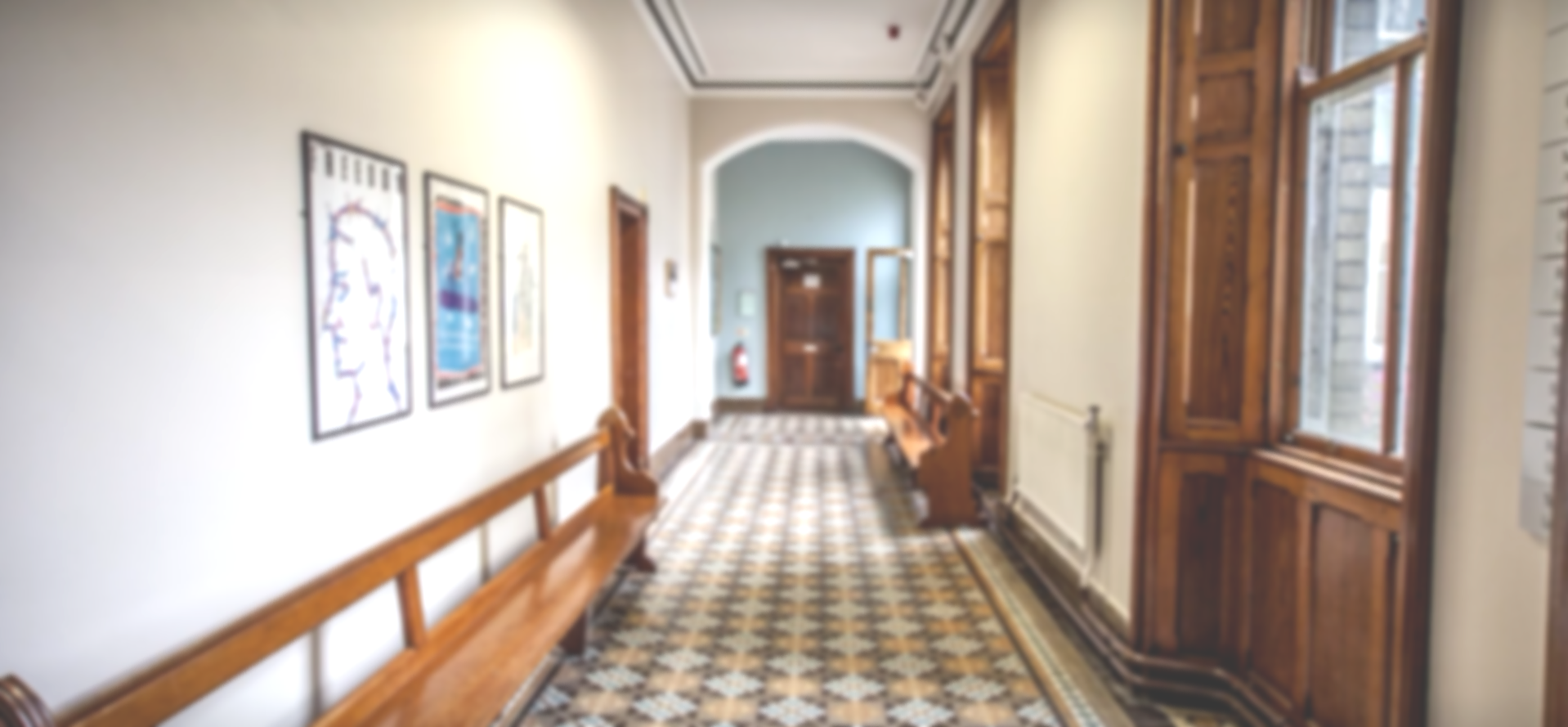
Ground Floor
Introduction- Magdalenes Laundries
(Image from: https://www.waterfordmemories.com/virtual-tour - Convent Building: Stairs in the Main Hall)
What are the Magdalene Laundries?
The first Magdalene Asylum was founded in 1765 at Denny House. It was opened in an attempt to ‘save’ the prostitutes of Dublin.
In 1906, with the introduction of the Vice-Regal Commission on Poor Law Reform in Ireland, it was advised that Mother and Baby Homes should be established for first-time unmarried mothers. These were to be owned/managed by religious communities or philanthropic persons. From 1922 to the 1970s, Religious orders established and controlled these institutions with the support of the State. During this period, around three hundred private maternity homes were registered under the Registration of Maternity Homes Act of 1934.
Ireland had just become a Free State in 1922 and was seeking to find its own identity from Britain. One aspect was for it to strengthen its connection with Catholicism. In 1911, 74% of the population was Catholic, which increased to 93% in 1926. Not only did the Catholic Church's morals and ideas seep into public life with its growing influence, but they would become a staple in the government and local community councils.
The Department of Children, Disability and Equality’s (DCDE) report investigated 10 laundries under the four religious orders - the Sisters of the Good Shepherd, Congregation of the Sisters of Mercy, Our Lady of Charity of Refuge and Religious Sisters of Charity.
There were about 56,000 unmarried mothers and about 57,000 children in the mother and baby homes and county homes, where the largest number of admissions was in the 1960s and early 1970s. However, it is possible that there were approximately 25,000 unmarried mothers and children in these institutions that were not investigated by the DCDE report.
The age range was from 12 to women in their 40s. 80% were between 18 and 29 years old, and 11.4% were under the age of 18.
The last Magdalene Laundry closed in 1998.
Mother and Baby Home
Mother and Baby Homes were facilities for mothers who had one child out of wedlock.
Country Home
Grew the workhouses established under the Poor Relief (Ireland) Act 1838 to provide ‘relief’ for the elderly, destitute, homeless, travellers, and single mothers and their children.
Magdalene Laundry
(Previously known as the Magdalene Asylums) For repeat offenders or mothers who were pregnant out of wedlock two or more times.
Definitions from Department of Children, Disability and Equality (2021)
Magdalene Laundries *
Magdalene Laundries *
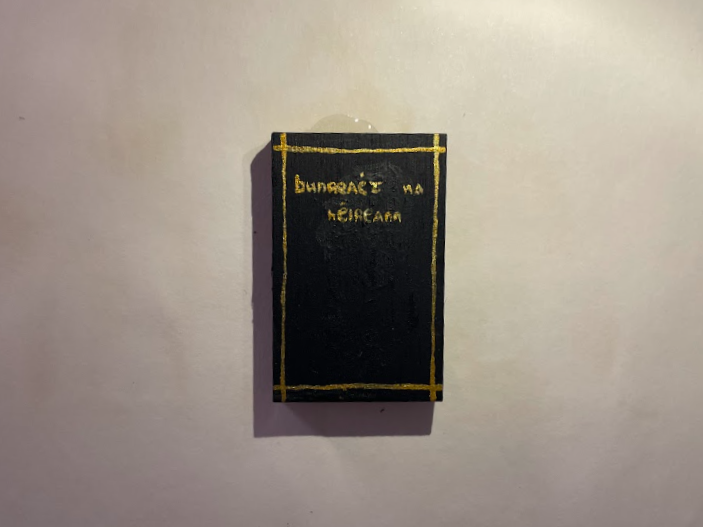
The 1937 Irish Constitution (Bunreacht Na hÉireann) held two key articles that would frame the context for the foundation of the Magdalene Laundries:
Article 41.1.2: The State, therefore, guarantees to protect the Family in its constitution and authority, as the necessary basis of social order and as indispensable to the welfare of the Nation and the State.
Article 40.3.3: The State acknowledges the right to life of the unborn and, with due regard to the equal right to life of the mother, guarantees in its laws to respect, and, as far as practicable, by its laws to defend and vindicate that right.
The Constitution
Article 41.1.2 sought to protect this idealised version of a nuclear family from immoral values, while Article 40.3.3 presented that the unborn life of the baby was equal to the mother’s life. Thus, Article 40.3.3 was a foundational reason for the Irish State to ban contraceptives for women. However, the State did not provide an alternative except for abstinence.
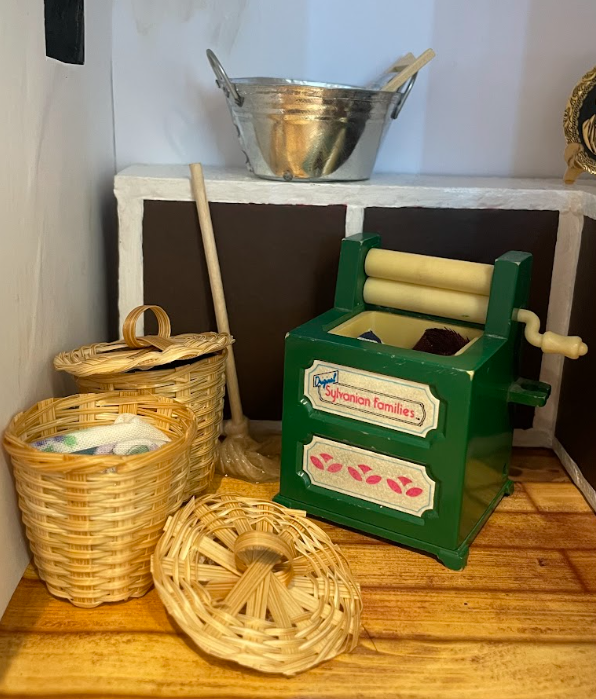
The work the women were allocated was needlework, laundry and other household duties. These duties were to provide the women with skills to enter the workforce after leaving. Most of the work was associated with domestic labour.
Mary Harney explained that the report excluded instances of forced labour, like children polishing the floors on their hands and knees and cleaning the graveyard headstones with wire brushes that led to their knuckles bleeding. Some mothers would work weeks, if not days, before and after their pregnancy.
The work was viewed as the women washing away their sins. Most of the mothers did not receive payment for their labour.
Labour
‘The first thing you do in the morning, you go to say your prayers, outside your bedroom door. Then you come down, get your breakfast. Then you have your breakfast, you go to the chapel…the…have a visit. Then you come back, you do your room, then you go down to the laundry…and do the laundry, I had to do the big sheets...’ - Nancy Shannon
Statements from Justice for Magdalene Research.
Nuns would be the main point of contact for these women in the Mother & Baby Homes and Magdalene Laundries. They are the ones who decided the work, adoptions and release dates.
Some women felt that they could not return to society, whether that was through social stigma or financial reasons. Women could stay working in the Laundries, hoping to become a nun. However, these women would not be considered ‘real’ nuns because of their past.
Women were told that they were required to remain in the institution for 2 years after the birth of their child for ‘rehabilitation’. Women from richer families could pay a fee to leave earlier, while those from poor classes had to work to earn their freedom. Some mothers stayed to be close to their children. This was also a legal requirement, as legal adoptions were not implemented until 1953.
Within the Laundry
Children born out of wedlock were labelled ‘illegitimate’. This label would follow them for the rest of their lives. Whether that was through adoption or being sent to industrial schools, the children were branded with this term that made the public look down upon them because of religious morality.
Though Scottish people can access their birth records since 1930, English and Welsh people since 1976 and Northern Irish people since 1987, Irish adoptive children struggled to receive such information since a case in 1998 that favoured the rights to the mother's privacy. It often takes 2-3 years to receive any information.
In Caelainn Hogan’s work, she talks to Karl O’Kelly, who was born and raised in St Patrick’s Mother and Baby Home. Caelainn recounts his impactful comment on the erasure of the homes:
Children
‘Karl talked about dating from the Easter Rising; people still came to run their fingers along the marks, touching history. But the place where he was born has no scrap left for him to go and put a hand on. It was the same with many of the other institutions where women were secreted away. They felt erased from the history of the country. The lands were being sold off, built over and forgotten.’